Author: admin

Council tax liability order court documents and enforcement papers

What Is a Council Tax Liability Order?

Updated for 2026

If you have fallen behind on your council tax payments, your local council can apply to the magistrates’ court for a council tax liability order. This court order confirms the debt and gives the council wide-ranging powers to recover the money you owe. Understanding how the process works, what your rights are, and how to respond can make a real difference to the outcome.

What Is a Council Tax Liability Order?

A council tax liability order is a legal order granted by the magistrates’ court in England and Wales. It confirms that a named person owes a specific amount of council tax and gives the local authority formal enforcement powers to collect that debt.

Local councils in England and Wales obtain millions of liability orders every year. In 2024/25, councils in England alone obtained an estimated 2.4 million liability orders, according to GOV.UK council tax collection data. These figures show just how common the process is, and why knowing your rights matters.

A council tax liability order does not create a new debt. It simply gives the council legal authority to use enforcement methods that were not available before the order was granted. The underlying debt is the unpaid council tax itself.

How the Council Tax Liability Order Process Works

The route from a missed payment to a council tax liability order follows a set sequence. Each stage gives you a chance to act before things escalate further.

Stage 1: Reminder Notice

After you miss a council tax payment, your council will send a reminder letter. This usually gives you seven days to pay the missed instalment. If you pay within that window, your normal payment schedule continues as before.

Stage 2: Final Notice

If you miss a second payment (or fail to pay after the first reminder), the council issues a final notice. At this point, you lose the right to pay in instalments and the full remaining balance for the financial year becomes due immediately.

Stage 3: Summons to Magistrates’ Court

When the full balance remains unpaid, the council applies to the magistrates’ court for a liability order. You will receive a court summons in the post. This will state the amount owed, any court costs being added, and the date of the hearing.

Court costs vary by council but typically range from £70 to £120. These are added on top of the council tax you already owe, so the total can increase significantly.

Stage 4: The Hearing

The magistrates’ court hearing is usually brief. Councils often list dozens of cases in a single session. The magistrate checks that the correct procedures were followed and, if satisfied, grants the council tax liability order. In most cases, orders are granted without opposition.

You can read the official process on the GOV.UK council tax arrears page.

What Powers Does the Council Get After a Liability Order?

Once a council tax liability order has been granted, the council gains several enforcement powers. It does not need to go back to court to use most of them.

  • Send enforcement agents (bailiffs) to your home to collect the debt or seize goods. Our guide on what powers bailiffs have explains what they can and cannot do at your door
  • Apply for an attachment of earnings order, which takes money directly from your wages before you receive them
  • Deduct money from benefits such as Universal Credit, Income Support, or Jobseeker’s Allowance (typically around £3.70 per week in 2026)
  • Apply for a charging order against your property, which secures the debt against your home
  • Petition for your bankruptcy if the debt is large enough
  • As a last resort, apply to the magistrates’ court for a committal hearing, which could lead to a prison sentence of up to 90 days, though this requires proof of wilful refusal or culpable neglect to pay

The council chooses which enforcement method to use. It can also use more than one method at the same time. For instance, it might instruct bailiffs and apply for an attachment of earnings simultaneously.

Should You Attend the Liability Order Hearing?

You are not legally required to attend the magistrates’ court hearing, and many people do not. However, there are situations where attending could help.

You can challenge a council tax liability order at the hearing if you have a valid legal defence. Accepted defences include:

  • You have already paid the amount claimed in full
  • You are not the person legally liable for council tax at that address (for example, if you had already moved out)
  • The council did not follow the correct notification procedures before applying for the order
  • The amount claimed is wrong

Being unable to afford the council tax is not a legal defence against the order being granted. The magistrate can only consider whether the debt is owed and whether the correct process was followed. Affordability is a matter for you and the council to discuss separately.

If you do attend, arriving early gives you the chance to speak to the council’s representative before the hearing starts. Some councils will agree to withdraw the summons on the spot if you can set up a repayment plan there and then.

How to Avoid a Council Tax Liability Order

The single most important step is to contact your council as early as possible. If you know you are going to struggle with payments, do not wait for the reminder letters to arrive.

Most councils will agree to a repayment arrangement if you contact them before enforcement action begins. This could mean spreading your arrears over several months on top of your current year’s payments.

You should also check whether you qualify for a council tax reduction. Many households are entitled to help they do not know about. Our guide on council tax support and how to reduce your bill explains the main discounts and exemptions available in 2026.

Other options that could help include:

  • Applying for council tax support (also called council tax reduction), which can reduce your bill by up to 100% depending on your income
  • Claiming the single person discount (25% off) if you are the only adult in your household
  • Checking your council tax band is correct through the VOA council tax band checker
  • Requesting a payment plan that spreads your payments over 12 months instead of 10

Free, confidential debt advice is available from MoneyHelper and StepChange, both of which can help you work out a budget and negotiate with your council.

What Happens If You Already Have a Liability Order Against You?

If a council tax liability order has already been granted, you still have options. The order does not mean bailiffs will turn up tomorrow. There is usually a gap between the order being granted and enforcement action starting.

Contact your council straight away and ask to set up a repayment arrangement. Many councils prefer to agree a payment plan rather than spend more money on enforcement. Be honest about what you can afford and stick to whatever arrangement you agree.

If bailiffs have already been instructed, you still have rights. Enforcement agents must follow strict rules set out in the national standards for enforcement agents. They cannot force entry into your home on a first visit for council tax debt, and they must give you at least seven days’ notice before their first visit. Read more in our guide on what happens when you fall behind on council tax.

If you believe a bailiff has broken the rules or treated you unfairly, you can make a formal complaint. Our article on council tax bailiff complaints walks you through the process step by step.

Get Free Help With Council Tax Liability Orders

Dealing with a council tax liability order can feel overwhelming, but you do not have to face it alone. Council Tax Advisors provides free, confidential advice to people across England and Wales who are struggling with council tax debt.

Whether you have received a court summons, already have a liability order, or are worried about bailiff action, we can help you understand your options and negotiate on your behalf.

This article provides general information only and does not constitute financial or legal advice. For free, confidential debt support, contact StepChange or Citizens Advice.

Debt collection agencies letters and phone notifications

Debt Collection Agencies: How to Deal With Lowell, CapQuest and Moorcroft

Debt Collection Agencies: How to Deal With Lowell, CapQuest and Moorcroft

Updated for 2026

If you have received letters or phone calls from debt collection agencies such as Lowell, CapQuest or Moorcroft, you are not alone. Thousands of people across England and Wales are contacted by these companies every year, and it can feel overwhelming. The good news is that debt collection agencies have strict rules they must follow, and you have rights. This guide explains what these companies can and cannot do, and how to take back control of your finances.

What Are Debt Collection Agencies?

Debt collection agencies are companies hired by original creditors to recover money owed. If you have fallen behind on payments for things like credit cards, personal loans, mobile phone contracts or council tax, your original creditor may pass your account to a third-party collector.

Companies like Lowell, CapQuest (now part of Arrow Global) and Moorcroft are among the largest debt collection agencies operating in the UK. They buy debts at a reduced rate or work on commission. Once they take over your account, they become the point of contact for repayment.

It is important to understand that these agencies do not have any special legal powers beyond what the original creditor had. They cannot force entry to your home, seize your belongings or take money directly from your bank account without a court order.

Your Rights When Contacted by a Debt Collector

The Consumer Credit Act 1974 and Financial Conduct Authority (FCA) guidelines set out clear rules that debt collection agencies must follow. Here is what you need to know:

  • They must identify themselves clearly and explain which debt they are collecting
  • They cannot contact you at unreasonable times, such as very early in the morning or late at night
  • They must not use threatening, aggressive or misleading language
  • They cannot discuss your debt with anyone other than you (or your authorised representative)
  • They must provide written confirmation of the debt if you request it
  • They cannot add charges to the debt unless the original credit agreement allows it

If a debt collection agency breaks any of these rules, you can report them to the Financial Ombudsman Service or the FCA directly.

How to Respond When Debt Collection Agencies Contact You

The worst thing you can do is ignore correspondence from debt collection agencies. While their letters and calls can feel intimidating, burying your head in the sand usually makes the situation worse. Here are the steps you should take:

1. Check the debt is legitimate

Ask for a copy of the original credit agreement. Under the Consumer Credit Act, the agency must provide this within 12 working days. If they cannot prove you owe the money, they cannot enforce the debt.

2. Check the debt has not expired

In England and Wales, most unsecured debts become unenforceable after six years if no payments have been made and the debt has not been acknowledged in writing. This is known as a statute-barred debt. Be careful not to make a payment or acknowledge the debt in writing, as this can restart the clock.

3. Work out what you can afford

Use a budget planner from MoneyHelper to calculate your disposable income. Debt collection agencies are required to accept reasonable offers of repayment, even if the amount is small.

4. Put your offer in writing

Send a letter or email setting out your financial situation and what you can realistically afford to pay each month. Keep copies of everything. If the agency refuses a reasonable offer, this could count in your favour if the matter ever reaches court.

Dealing With Lowell, CapQuest and Moorcroft Specifically

Each of these debt collection agencies operates slightly differently, but the same principles apply to all of them.

Lowell is one of the UK’s largest debt purchasers. They buy debts from companies like mobile phone providers, catalogue companies and utility firms. Lowell typically sends a series of letters before making phone calls. They have an online portal where you can set up a repayment plan.

CapQuest (now operating under Arrow Global) purchases debts from banks and credit card companies. They are regulated by the FCA and must follow the same rules as any other debt collector.

Moorcroft acts as a debt collection agent rather than a debt purchaser, meaning they collect on behalf of the original creditor. They are often used by energy companies, water companies and local councils.

With all three, the key is to engage early. Contact them, explain your situation and agree a payment plan you can stick to. If you cannot afford to pay anything at all, seek free debt advice before responding.

What Debt Collection Agencies Cannot Do

There are common misconceptions about the powers debt collection agencies hold. To be clear, they cannot:

  • Enter your home without your permission (only certificated bailiffs with a court order can do this in limited circumstances)
  • Take your belongings or vehicle
  • Have you arrested or sent to prison for non-payment of most debts
  • Add their own fees to the debt unless the original agreement specifically allows it
  • Pretend to be bailiffs or enforcement agents
  • Contact your employer about the debt (unless they have a legal right to do so, such as an attachment of earnings order)

If a debt collector claims they will send bailiffs to your home, this is almost certainly an empty threat. Bailiff action requires a court order, and even then, strict rules apply. You can read more about what enforcement agents can and cannot do on our site.

When Debt Becomes Unmanageable

If you are dealing with multiple debts and cannot see a way forward, formal debt solutions may help. Options available in England and Wales include:

  • Debt Management Plans (DMPs): an informal arrangement to repay debts at a reduced monthly amount
  • Individual Voluntary Arrangements (IVAs): a legally binding agreement to repay a proportion of your debts over five to six years
  • Debt Relief Orders (DROs): available if you owe less than £30,000, have minimal assets and low disposable income
  • Bankruptcy: a last resort for debts you genuinely cannot repay

Free advice on all of these options is available from StepChange, Citizens Advice and the MoneyHelper debt service.

You can also read our guide on personal debt in the UK for a broader picture of the current debt landscape and the support available to you.

How Council Tax Advisors Can Help

At Council Tax Advisors, we provide free guidance for people struggling with debt, including those being pursued by debt collection agencies. Whether your debts relate to council tax, credit cards, personal loans or utility bills, we can help you understand your options and take practical steps towards clearing what you owe.

We work with you to create an affordable repayment plan that fits your budget. We can also advise on your rights if a debt collector is overstepping the mark, and point you towards council tax support if rising bills are part of the problem.

You do not have to deal with debt collection agencies on your own. Getting advice early can prevent the situation from escalating to court action or bailiff involvement.

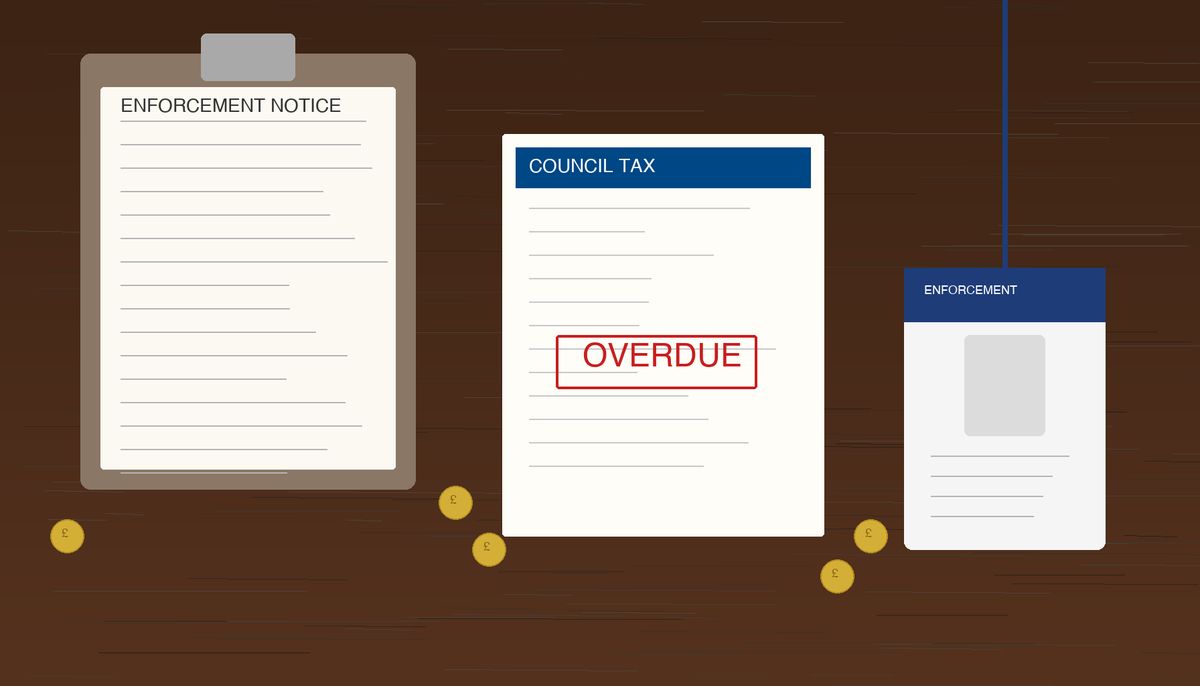
Council tax enforcement agent badge and clipboard with overdue notice

Council Tax Enforcement Agents: What Rossendales Bailiffs Can and Cannot Do

Updated for 2026

Council tax enforcement agent badge and clipboard with overdue notice

Council Tax Enforcement Agents: What Rossendales Bailiffs Can and Cannot Do

If a council tax enforcement agent turns up at your door, it can be a stressful and confusing experience. You might not know what they are allowed to do, whether you have to let them in, or what your options are. Rossendales (now part of Marston Holdings) is one of the largest enforcement companies working on behalf of local councils in England and Wales, and understanding how their agents operate can help you protect your rights and deal with the situation calmly.

Who Are Rossendales Council Tax Enforcement Agents?

Rossendales has been providing bailiff and warrant services to local government and the public sector since 1972. The company works with over 140 local authorities across England and Wales, including district councils, city councils, metropolitan and unitary authorities, and London boroughs. Their primary focus is the collection of unpaid council tax on behalf of these authorities.

In recent years, Rossendales became part of Marston Holdings, one of the UK’s largest enforcement groups. Despite the name change at corporate level, many people still refer to them as Rossendales, and their agents continue to operate under the same regulatory framework that governs all council tax enforcement officers in England and Wales.

As doorstep enforcement agents, Rossendales staff are trained to recover outstanding council tax debts quickly and efficiently. They are given performance targets by the councils they serve, which means they are motivated to secure payment. However, they must still operate within the law, and you have clear rights when dealing with them.

What Can a Council Tax Enforcement Agent Do at Your Door?

When a council tax enforcement agent from Rossendales arrives at your property, they are there to collect a debt that has already been through the courts. Before an enforcement agent can visit, your council will have obtained a liability order from the magistrates’ court. This gives the agent legal authority to attempt to recover the money you owe.

However, there are strict limits on what they can do during that first visit. On their initial attendance, an enforcement agent cannot force their way into your home. This is a common misconception. They must be invited in, or gain what is called “peaceful entry”, meaning you open the door and allow them to step inside voluntarily.

If you do not let them in, they cannot break down your door, climb through windows, or use physical force to enter your property. They can, however, take goods that are outside your home, such as a vehicle parked on your driveway. The rules around bailiff laws in England and Wales are designed to balance the council’s right to collect the debt with your right to feel safe in your own home.

What Happens If You Let a Council Tax Enforcement Agent In?

If you do grant a Rossendales enforcement agent peaceful entry to your home on their first visit, the consequences can be significant. Once inside, they may list your belongings as potential assets to cover the debt. This process is known as “taking control of goods” and it gives the agent a legal interest in those items.

More importantly, once you have granted peaceful entry, the agent is then permitted to re-enter your property on future visits. This means they could return and, if necessary, use reasonable force to gain entry. Reasonable force does not mean violence or smashing windows. It typically means using a locksmith to open a door. But it does mean you lose the protection of being able to simply refuse entry.

This is why many debt advice organisations recommend that you do not let enforcement agents into your home on their first visit. Instead, communicate with them through the door, in writing, or by telephone.

Items enforcement agents cannot take

Even if an enforcement agent does enter your property, there are items they are not allowed to seize. These include:

  • Essential household items such as a cooker, fridge, washing machine, bedding, and clothing
  • Items that belong to someone else living in the property (you may need to prove ownership)
  • Tools of the trade up to a combined value of £1,350
  • Items on hire purchase or subject to a finance agreement
  • Guide dogs or assistance animals

If an enforcement agent attempts to seize protected items, this is a breach of the Tribunals, Courts and Enforcement Act 2007 and you should make a formal complaint.

Council Tax Enforcement Agent Fees: What You Should Expect

Enforcement agents are allowed to add fees to the debt they are collecting. These fees are set by law under the Taking Control of Goods (Fees) Regulations 2014 and are as follows for the 2025/26 financial year:

  • Compliance stage: £75 (a letter sent before any visit)
  • Enforcement stage: £235 plus 7.5% of the debt over £1,500
  • Sale stage: £110 plus 7.5% of the debt over £1,500

These fees can add up quickly, which is why it is so important to act early. If you are contacted at the compliance stage, you may still be able to arrange a payment plan directly with your council before the fees escalate. For more detail on what charges are allowed, read our guide to bailiff charges and enforcement agent rules.

How to Deal With a Rossendales Council Tax Enforcement Agent

If Rossendales contact you or turn up at your home, there are practical steps you can take to protect yourself and begin resolving the debt.

Stay calm and know your rights

Do not panic. Remember that on their first visit, an enforcement agent cannot force entry. You are within your rights to speak to them through a closed door or window. Ask for their name, ID number, and which council they are acting for. Every enforcement agent must carry a valid certificate issued by the county court, and they should be willing to show it.

Do not ignore the situation

Ignoring letters and visits will not make the problem go away. The fees will continue to rise, and the council may escalate enforcement further. In extreme cases, persistent non-payment of council tax can lead to a committal hearing, where a magistrate could impose a prison sentence of up to three months. While imprisonment is rare, it does happen.

Try to agree a repayment plan

If you cannot pay the full amount, you should be prepared to offer a realistic repayment plan. Rossendales agents are often willing to accept instalments, especially if you can demonstrate that you are making a genuine effort. You can pay by phone, online, by post, or at certain banks.

Get free debt advice

If the enforcement agent rejects your offer or you feel overwhelmed, seek help from a free debt advice service. Organisations like StepChange, MoneyHelper, and Citizens Advice can help you draw up a budget, negotiate with your council, and explore options such as a council tax reduction, a breathing space moratorium, or a formal debt solution.

Making a Complaint About a Council Tax Enforcement Agent

If you believe a Rossendales enforcement agent has behaved improperly, broken the rules, or treated you unfairly, you have every right to complain. Start by contacting Rossendales (Marston Holdings) directly through their formal complaints process. If that does not resolve the issue, you can escalate the complaint to your local council, since they are the ones who instructed the enforcement action.

You can also report serious breaches to the Ministry of Justice, which oversees the certification of enforcement agents. If an agent has committed a criminal offence, such as using violence or entering your home unlawfully, you should contact the police.

For guidance on how to make a complaint, see our article on council tax bailiff complaints.

Getting Help With Council Tax Debt

Dealing with a council tax enforcement agent can feel overwhelming, but you are not alone. Council Tax Advisors is a specialist community interest company with extensive experience of helping people who are being contacted by Rossendales and other enforcement companies. We can help you understand your rights, create a realistic repayment plan, and act as a buffer between you and the enforcement agents.

Whether you are at the early stages of falling behind or already facing doorstep visits, the most important thing is to take action now. The sooner you seek advice, the more options you will have and the lower the fees will be.

Speak to Us Today

If you are struggling with council tax debt and need help dealing with enforcement agents, get in touch. Our advisors are here to help you find a way forward.

Get Free Advice

Save money on utility bills with energy meters and pound signs

How to Save Money on Your Utility Bills in 2026

How to Save Money on Your Utility Bills in 2026

Updated for 2026

If you are looking for ways to save money on utility bills, you are far from alone. Millions of UK households are struggling with the cost of gas, electricity and water, and rising prices have put real pressure on family budgets. Whether you are already behind on payments or simply want to cut back before things get tight, there are practical steps you can take right now to bring your bills down.

Why Utility Bills Have Risen So Much

Energy prices in the UK have been on an upward trend for years. The Ofgem energy price cap, which limits what suppliers can charge per unit of gas and electricity, hit record highs in 2022 and 2023. While the cap has come down since then, bills remain well above pre-2021 levels. Water bills have also increased, with many companies raising charges by 5% or more for 2025/26.

For households on low incomes or those already dealing with personal debt, these increases can tip the balance. When your energy bill goes up by hundreds of pounds a year, it often means other bills go unpaid. Council tax arrears are one of the most common knock-on effects, as people prioritise keeping the lights on over paying the council.

How to Save Money on Utility Bills: Practical Steps

You do not need to make drastic changes to see a difference. Here are some of the most effective ways to reduce what you spend on gas, electricity and water each month.

Switch to a cheaper energy tariff

One of the quickest wins is comparing energy deals. If you are on a standard variable tariff, you are almost certainly paying more than you need to. Use a comparison service like Ofgem’s price cap page to understand your current costs, then check whether a fixed deal could save you money. Even small savings per month add up over a year.

Use less energy at home

Turning your thermostat down by just one degree can save around 10% on your heating bill. Other simple changes include switching to LED bulbs, only boiling the water you need, and using your washing machine at 30 degrees. Draught-proofing windows and doors is a low-cost way to keep heat in during winter.

Get a smart meter

Smart meters let you see exactly how much energy you are using in real time. This makes it much easier to spot where you are wasting money. Your supplier is required to offer you one at no extra cost, so there is no reason not to have one fitted.

Check if you qualify for the Warm Home Discount

The Warm Home Discount scheme gives eligible households a one-off discount of £150 on their electricity bill each winter. You may qualify if you receive Pension Credit or if your energy supplier considers you to be on a low income. It is worth checking every year, as the rules can change. The government’s official guidance on the Warm Home Discount explains the current eligibility criteria.

Reduce your water bill

If you are on a water meter, shorter showers, fixing dripping taps and using a washing-up bowl instead of running the tap can all make a noticeable difference. If you are not on a meter and your household is small, switching to a metered supply could actually save you money. Your water company can advise on whether this would work for you.

Government Help With Utility Bills

The UK government offers several schemes to help people who are struggling to pay their energy bills. These include:

  • Winter Fuel Payment: an annual payment of between £100 and £300 for people born before a qualifying date (eligibility has been tightened from 2024/25, so check the latest rules)
  • Cold Weather Payment: £25 for each seven-day period of very cold weather, paid to people on certain benefits
  • Energy Company Obligation (ECO): free or subsidised home insulation and heating improvements for eligible households
  • Household Support Fund: a local council fund that can help with energy costs, food and other essentials

You can check what you are entitled to on the MoneyHelper bill prioritiser tool, which also helps you work out which bills to tackle first.

When Utility Debt Starts Affecting Other Bills

One of the biggest dangers of rising utility costs is the knock-on effect on other household bills. When energy bills eat into your budget, council tax payments are often the first thing to slip. Unfortunately, councils can take enforcement action quickly, including sending bailiffs or taking you to court.

If you are falling behind on council tax because of high energy costs, it is important to act before the situation escalates. Contact your council to ask about council tax support or a payment arrangement. Many councils will agree to a manageable plan if you reach out before a liability order is issued.

You should also look at whether you are paying the right amount of council tax in the first place. Thousands of homes in England and Wales are in the wrong council tax band, which means their occupants are overpaying every month without realising it.

Free Help If You Are Struggling With Bills

If your utility bills are piling up alongside other debts, free advice is available. Organisations like StepChange offer confidential debt advice and can help you put together a plan to deal with everything from energy arrears to credit card debt.

Citizens Advice can also help you negotiate with your energy supplier. Under Ofgem rules, your supplier must offer you a payment plan you can afford, and they cannot disconnect you if you are engaging with them and making an effort to pay.

If you are worried about reducing your energy bills alongside managing your council tax, our guide covers the overlap between the two and how to tackle both at once.

Debt charities report that most people wait over a year before seeking help, by which point the problem has grown significantly. The sooner you act, the more options you have.

Small Changes Add Up Over Time

Saving money on your household bills is not about one big fix. It is about making a series of small, sensible changes that reduce your outgoings month by month. Switching tariffs, using less energy, claiming the support you are entitled to and getting advice when you need it can collectively save you hundreds of pounds a year.

If you are already behind on your bills, do not ignore the problem. Whether it is utility debt, council tax arrears or a combination of both, help is available. You can also read our guide to saving money on your supermarket shop for more practical tips on cutting everyday costs.

Need Help With Council Tax or Debt?

If rising utility bills have left you struggling with council tax or other debts, we can help. Our advice is free, confidential and tailored to your situation. Get in touch today and take the first step towards getting back on track.

Personal debt in the UK, overdue bills and financial pressure

Personal Debt in the UK: What You Need to Know in 2026

Updated for 2026

Personal debt in the UK is rising at a pace that should concern every household. Whether you are juggling credit card balances, struggling with council tax arrears or falling behind on utility bills, millions of people across England and Wales find themselves under increasing financial pressure. If you are worried about personal debt, you are far from alone, and there are practical steps you can take right now to regain control.

Personal Debt in the UK: The Scale of the Problem

The numbers paint a stark picture. Total unsecured consumer debt in the UK passed £2 trillion during 2025, according to Bank of England data, and that figure continues to climb in 2026. Average household debt (excluding mortgages) now sits at approximately £4,300 per adult, a figure driven by credit cards, overdrafts, personal loans and buy now, pay later schemes.

The Financial Conduct Authority (FCA) has repeatedly flagged the aggressive marketing of consumer credit products as a factor fuelling the problem. Despite tighter regulations introduced over the past decade, many households still rely on short-term borrowing to cover everyday costs. This is not reckless spending for most people: it is a direct consequence of rising living costs, stagnant wages in some sectors and the ongoing impact of energy price volatility.

Why Personal Debt Keeps Growing

Several factors are driving the rise in personal debt across the UK in 2026:

  • Council tax bills have risen by an average of 5% in England for the 2025/26 financial year, with further increases expected from April 2026
  • Energy costs remain elevated despite some price cap reductions, leaving many households reliant on credit to cover winter bills
  • The cost of food, rent and essential services continues to outpace wage growth for lower-income households
  • Buy now, pay later products have normalised borrowing among younger adults, often without the same affordability checks applied to traditional credit
  • Interest rates, while easing from their 2023 peak, remain higher than the near-zero levels households grew used to before 2022

The combination of these pressures means that even people who manage their finances carefully can find themselves slipping into debt. Missing one council tax payment can quickly cascade into a court summons if you do not act early.

The Link Between Personal Debt and Council Tax Arrears

Council tax is a priority debt. That means your local authority can take enforcement action more quickly than most other creditors. When personal debt piles up, council tax is often one of the first bills people fall behind on, partly because there is no flexible repayment option built in: you either pay on time or you face consequences.

In 2024/25, English councils referred over 2.3 million council tax cases to enforcement agents (bailiffs). That figure has grown year on year as councils face their own budget pressures and become less willing to offer extended payment arrangements. If you are already dealing with credit card debt or loan repayments, a missed council tax instalment can tip the balance from manageable to crisis very quickly.

Understanding council tax support schemes available in your area could reduce your bill significantly if you are on a low income or claiming certain benefits.

Warning Signs That Personal Debt Is Becoming Unmanageable

It is easy to convince yourself that everything is fine until it suddenly is not. Look out for these signs:

  • You are using one credit product to pay off another
  • You can only afford minimum payments on your credit cards
  • You are regularly dipping into your overdraft before payday
  • You have missed payments on council tax, rent or utilities
  • You feel anxious about opening letters or checking your bank balance
  • You have considered payday loans or high-cost borrowing to cover essentials

If any of these sound familiar, it is a sign that you need to take action sooner rather than later. Ignoring debt does not make it go away: it makes it more expensive and more stressful.

Practical Steps to Deal With Personal Debt

The good news is that there are well-established routes to getting debt under control. None of them involve burying your head in the sand.

1. Get a clear picture of what you owe

Write down every debt: the creditor, the balance, the interest rate and the minimum payment. Include council tax arrears, energy debts and any informal borrowing from friends or family. You cannot tackle what you cannot see.

2. Prioritise your debts

Priority debts are the ones with the most serious consequences for non-payment. Council tax, rent, mortgage and energy bills come first. Credit cards and personal loans are important, but your home and liberty matter more. The MoneyHelper website has an excellent guide to prioritising debts.

3. Contact your creditors

Most creditors would rather agree a realistic payment plan than send in bailiffs or go to court. If you are behind on council tax, call your council and explain your situation. Many will agree a payment arrangement if you approach them before the liability order stage.

4. Explore formal debt solutions

Depending on your circumstances, you may benefit from a Debt Relief Order (DRO), an Individual Voluntary Arrangement (IVA) or even bankruptcy as a last resort. These are legal processes that can write off some or all of your debts. Free advice on these options is available from StepChange and Citizens Advice.

5. Boost your income where possible

Check whether you are claiming all the benefits you are entitled to, including council tax support, Universal Credit, Pension Credit and the Warm Home Discount. The GOV.UK benefits checker can help you identify what you might be missing.

Free Debt Advice: Where to Turn

One of the biggest barriers to dealing with personal debt is embarrassment. People put off seeking help because they feel ashamed, but there is nothing to be ashamed of. Millions of UK households are in the same position, and the debt advice sector exists specifically to help.

These organisations offer free, confidential advice:

  • StepChange Debt Charity: free online and telephone debt advice, including debt management plans
  • MoneyHelper (backed by the Money and Pensions Service): guidance on budgeting, debt and benefits
  • Citizens Advice: face-to-face and online help with debt, housing and benefits
  • National Debtline: free telephone advice and online tools

If your personal debt includes credit card balances, these services can help you negotiate lower payments or freeze interest charges while you get back on your feet.

What Happens If You Ignore Personal Debt

Doing nothing is always the worst option. For council tax arrears specifically, your council can apply for a liability order at the magistrates court, add court costs to your bill, instruct enforcement agents to visit your home and, in extreme cases, apply for a committal hearing that could lead to a prison sentence (though this is rare and only applies in England and Wales).

For other debts, creditors can obtain County Court Judgments (CCJs), which damage your credit score for six years and make it harder to rent a home, get a mortgage or even open a bank account. Ignoring the problem does not protect you: it removes your options.

How to Avoid Personal Debt in the Future

Once you have dealt with your immediate debts, building a small financial cushion can help prevent the cycle from repeating. Even saving £10 a week adds up to over £500 a year, enough to cover an unexpected bill without reaching for a credit card.

Other practical habits include:

  • Setting up a basic budget and reviewing it monthly
  • Switching to direct debit for council tax and utilities to spread costs evenly
  • Checking your credit report regularly (free through Experian, Equifax or TransUnion)
  • Avoiding buy now, pay later for non-essential purchases

Financial resilience is not about being wealthy. It is about having a plan and knowing where to get help when things go wrong.

Debt myths at Christmas: bills, calculator and festive decorations on a desk

12 Common Debt Myths Exposed: What You Really Need to Know

12 Common Debt Myths Exposed: What You Really Need to Know

Updated for 2026

There are plenty of debt myths floating around that cause unnecessary panic, especially during expensive times like Christmas. Misinformation about bailiffs, credit ratings and even prison can leave you feeling confused and afraid to seek help. This guide cuts through the noise and gives you the facts, so you can deal with debt confidently and make the right decisions for your household.

Myth 1: Bailiffs Can Force Their Way Into Your Home

This is one of the most common debt myths, and it causes real fear. The truth is that bailiffs (officially called enforcement agents) cannot force entry into your home on a first visit. They must ask to be let in, and you are under no obligation to open the door.

You can speak to them through a closed door, a window or even a letterbox. If you do let them in, they may begin listing goods to cover the debt. Once you have granted entry, they can return and use reasonable force to re-enter on a future visit.

In limited situations, such as collecting unpaid criminal fines or tax debts for HMRC, bailiffs may apply to a court for a warrant allowing forced entry. But for council tax arrears and most consumer debts, they cannot break in or push past you. The GOV.UK guide on bailiff rights explains the rules clearly.

Read our full guide on bailiffs at Christmas for more detail.

Myth 2: Bailiffs Can Take Anything They Want

Another persistent myth. Enforcement agents can only seize goods belonging to the person who owes the debt. They cannot take items belonging to your partner, children or housemates, though you may need to prove ownership.

Certain items are exempt from seizure by law. These include:

  • Essential household items such as a cooker, fridge, washing machine, bedding and clothing
  • Items needed for your work or study, up to a combined value of £1,350
  • Goods on hire purchase or owned by someone else

If a bailiff tries to take exempt goods, you can make a formal complaint.

Myth 3: Debt Collectors Can Contact You as Often as They Like

Debt collectors and creditors are not allowed to harass you. Under the Consumer Rights Act 2015 and FCA debt collection guidelines, excessive contact counts as harassment. This includes constant phone calls, threatening letters sent daily, or contacting you at unreasonable hours.

If a debt collector is pestering you, report them to the Financial Conduct Authority (FCA). You can also request that they only contact you in writing, which gives you time to think and respond properly.

Myth 4: Your Family Inherits Your Debt When You Die

This myth causes a lot of worry, but the reality is more straightforward. When someone dies, their debts are paid from their estate (savings, property and other assets). If the estate does not cover the debts, the remaining balance is usually written off.

Your family members are not personally responsible for your debts unless they were a joint borrower or guarantor. A surviving spouse is not liable for the other partner’s sole debts.

The exception is joint debts. If you had a joint mortgage or joint credit card, the surviving account holder becomes responsible for the full amount. For more on managing debts after a bereavement, see the MoneyHelper guide on debts after death.

Myth 5: You Can Go to Prison for Any Debt

You cannot be sent to prison for failing to repay credit card debt, personal loans or most consumer debts. If you fall behind, the creditor may apply for a County Court Judgment (CCJ), which sets out a repayment plan. But prison is not on the table.

The exceptions are council tax, TV licence evasion, and some types of tax fraud. Even with council tax, imprisonment is a last resort used only where the court is satisfied you had the means to pay but refused. If you are genuinely struggling financially, the magistrates’ court will not send you to prison.

Our guide on whether you can go to prison for council tax arrears covers this in full.

Myth 6: A Bad Credit Score Affects Everyone in Your Household

Your credit score is personal to you. Living with someone who has poor credit does not damage your own rating. Additional cardholders on your credit card are not liable for any debt built up on the account either.

The only time another person’s finances can affect yours is through a financial association. This happens when you open a joint account or take out a joint mortgage. Once financially linked, lenders may consider both credit files when making decisions.

If you have an old financial association with someone you no longer share finances with, you can ask the credit reference agencies to remove it. Check our guide on how to clean up your credit score for step-by-step instructions.

Myth 7: Missing a Mortgage Payment Means Losing Your Home

Missing a single mortgage payment does not mean your lender will repossess your home. Under FCA rules (MCOB 13), lenders must treat repossession as a last resort and explore all alternatives first.

If you are struggling, contact your lender straight away. They may offer a temporary payment holiday, extend your mortgage term, or switch you to interest-only payments for a period. The earlier you get in touch, the more options you have.

Courts can also delay or suspend a possession order if you can show you will be able to resume payments. Free legal help is available through housing charities and your local council.

Myth 8: Creditors Will Never Negotiate

Many people avoid calling their creditors because they assume the answer will be no. In reality, most lenders would rather negotiate than chase a debt through the courts.

If your credit card repayments are piling up, letting the creditor know early could see them freeze interest, reduce it temporarily, or agree a lower monthly payment. Some may even accept a partial settlement if you can offer a lump sum.

You are in a stronger position than you think. Creditors want their money back, and a realistic payment plan is better for them than writing the debt off entirely.

Myth 9: Overdrafts Are Always Expensive

Since April 2020, FCA rules have required banks to charge a single annual interest rate on overdrafts, replacing the old daily fee structures. Most banks now charge between 35% and 40% APR on arranged overdrafts.

That is not cheap, but it is transparent. Some banks offer interest-free buffers of £250 to £500 for certain accounts. If you regularly dip into your overdraft, it is worth comparing accounts to find the best deal.

An arranged overdraft used occasionally and paid off quickly costs relatively little. The real danger is relying on it as a long-term borrowing solution, where the interest adds up fast.

Myth 10: All Debt Is Bad Debt

High-interest borrowing on store cards or payday loans is clearly damaging. But not all debt is harmful. A mortgage, a student loan, or even a sensible credit card used and repaid monthly can build your credit history and help you access better financial products in the future.

Having no credit history at all can actually make it harder to get approved for a mortgage or other borrowing. Lenders want to see that you can manage credit responsibly. The key is keeping balances low and making payments on time.

Myth 11: You Have to Pay for Debt Advice

You never need to pay for debt advice. Free, professional and impartial help is available from several organisations, including:

  • StepChange: the UK’s largest debt charity, offering online and phone advice
  • MoneyHelper: government-backed guidance on budgeting, debt and benefits
  • Citizens Advice: free legal and financial guidance on almost any issue
  • Council Tax Advisors: free information on council tax debt and your rights

Be wary of any company that charges upfront fees for debt management. Legitimate solutions like Debt Relief Orders, IVAs and Breathing Space are all available without paying a fee-charging firm.

Myth 12: Ignoring Debt Makes It Go Away

This might be the most dangerous myth of all. Ignoring debt does not make it disappear. Unpaid debts attract interest, fees, and eventually legal action. For council tax arrears, your local authority can apply for a liability order and instruct bailiffs within weeks of a missed payment.

The sooner you face the problem, the more options you have. Payment plans, hardship funds, council tax support and formal debt solutions are all easier to access before things escalate.

Read our guide on Christmas borrowing risks to understand how seasonal overspending can spiral quickly.

Get Free Help With Debt Today

If debt myths have been holding you back from getting help, take the first step today. Our team provides free, impartial information on council tax arrears, bailiff rights and debt solutions across England and Wales. You do not have to face this alone.

Contact us for free advice.